AI And Automation: The Inevitable
This was originally written on Medium by me in 2020 inspired by a CGP Grey video, and seeing how prophetic this writing was, I am sharing it here.
Self-driving Cars
Vehicle operators and drivers consist of roughly ten million people employed in the European Union. The worldwide image is similar, although it’s difficult to find a concrete number, a significant chunk of the populace is involved in driving professions (there are about 240,000 registered rickshaws in Dhaka alone!). These jobs are mostly GONE.
Uber, Waymo, Volvo, Apple, BMW, GM, Baidu, Tencent and every other tech or motor companies that do not want them to become irrelevant (no company does) are developing self-driving cars. Some of them have already developed cars that can drive without any major headaches and have driven thousands of kilometres, completely safely.
And considering that, self-driving cars don’t drink, don’t get tired, don’t text, don’t phone etc, it’s very easy to see why they are already a better replacement for most drivers.
And so, they are already better than human drivers and they are a partial solution (main solution is obviously public transport) to the extreme problem of traffic as well.
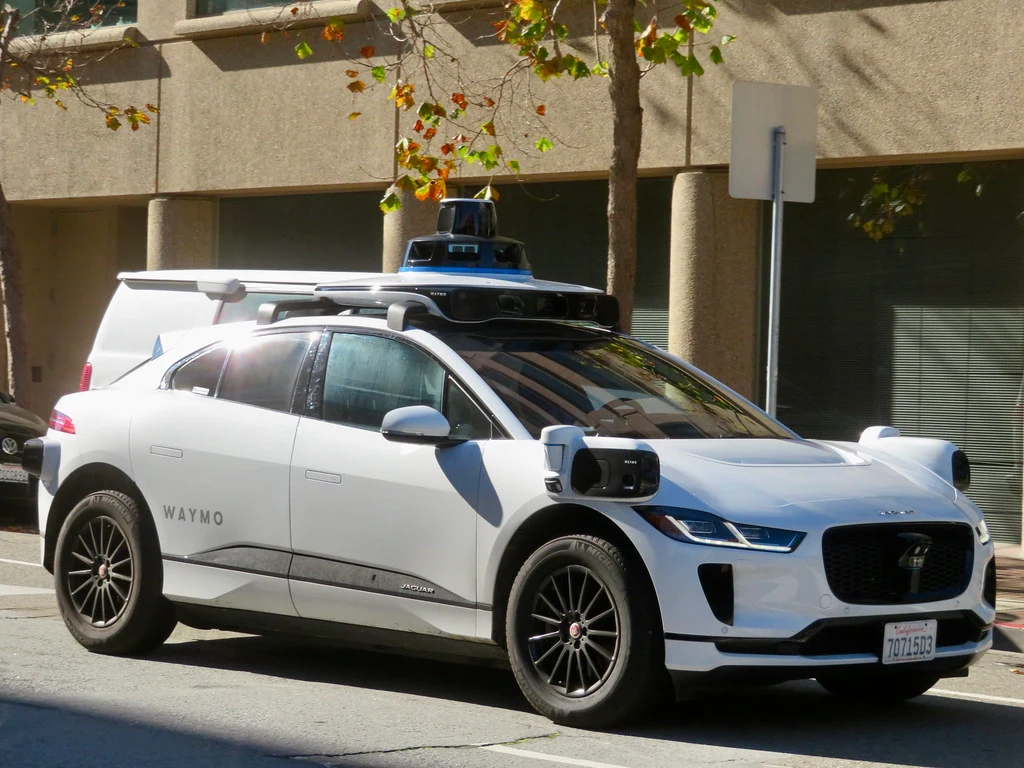
Thus, within the next half of this century, driving may become a rare occupation.
The question is, what would happen to those who would become unemployed in this bloodbath and their families?
The answer, my friend, is blowing in the wind.
The Upcoming Revolution
From the dawn of human civilisation, there come some changes, which change the way we live our life.
The advent of artificial intelligence and automation is a coming change that will change the way we live our lives forever.
“Humans” Last Great Inventions?
Artificial intelligence and automation combined may lead to the utopia so many philosophers and writers have dreamed of, but this dream of utopia may not be as sweet, especially for the transition period, or may not even come true. But there are three ways human society may find itself in a post automation economy.
• The Good
The economy becomes heavily reliant on automation and artificial intelligence, and people are free to do whatever they like. There will be a universal basic income (UBI), enough for everybody to be free from the burden of having a job, yet those who are interested may have them. In short, the utopia that everyone wants to happen.
However, it is highly dependent on many ifs and buts. If world leaders recognise the problems that may arise from this revolutionary changes, if they unite and decide to work together to improve the condition and to face the challenges, if countries like the USA, China etc decide to ignore their differences and also help countries like South Sudan, Niger etc, only then a scenario like this may play out.
• The Bad
This, according to most economists and social scientists who are bold enough to predict the future, will be the most probable outcome of the changes to come. In this case, there may be UBI, but it wouldn’t be enough for those who are poor due to the vast inequality between the haves and have-nots. All this would lead to riots and violence, making the quality of life of the wealthy also less, compared to the first scenario.
People would have to compete against artificial intelligence induced automation in a declining market for jobs, but still may be able to sustain themselves due to government subsidies and other incentives.
In this case, power may become extremely centralised to the 1%, as in countries like Saudi Arabia, and it may also lead society into the ugly scenario.
• The Ugly
In this scenario, UBI or other social welfare may be non-existent due to funding or other issues (because those in power may not have enough incentives to create such a measure, nor will the people have enough power to do so), leading to starvation and other fundamental issues. It is very likely for countries that are completely unprepared for the changes to come. Bangladesh and other developing countries may fall victim to it.
There’s a silver bullet to this ugly scenario; after all these changes take place, the situation may turn towards the good scenario.
Debunking The Myths
The greatest myths that surround automation and artificial intelligence are, newer and more sophisticated jobs will arise that we can’t imagine which will help replace the old jobs that are already there; artificial intelligence and automation will never really be able to penetrate human society at large; if things turn so ugly that people do not have enough money to buy the stuff automation produces, they wouldn’t be produced at all; people would move to various creative pursuits and professions. There are other myths surrounding automation and artificial intelligence, but I feel like these are the most common myths that should be tackled.
New Jobs Will Fill The Hole Of Old Jobs
One of the most prevalent sentiment amongst the populace is that as artificial intelligence and automation start to penetrate human society in a big way, new jobs will be created we can’t imagine. But this is probably the most dangerous and outright wrong idea that we have.
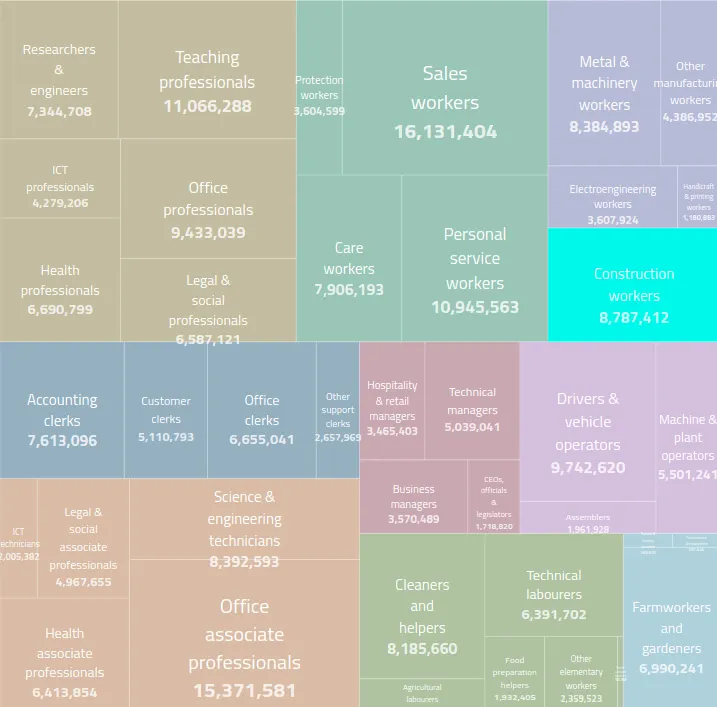
Take a good hard look at the data visualisation, noticed anything interesting?
Almost all the jobs existed in one form or another 100 years ago other than ICT professionals and ICT technicians, yet our lives are now completely dominated by technology.
I am writing this document using technology, you are reading this using technology; in this time of the Coronavirus pandemic, almost everything official is being done through technology. Being such a huge part of our lives, you would expect these types of jobs to completely dominate our job spheres, and yet they don’t, not even in the EU!
The same thing goes for other developed countries. Even though technology has virtually revolutionised our life, it isn’t really a significant part of our labour force, the old-school jobs that existed well before this revolution are still the main drivers of our employment.
And this is the case for the highly developed economies, how big of a driver of employment is in the developing world, say Indonesia?
Short answer: They are not.
You may think, this example only presents a partial picture of the scenario, after all, many indirect jobs may also have been created by all these changes, which is not being fairly represented here. But this is a highly debated topic among the academics and I am not going to delve into that.
What I can do to you, is present to you an example.
General Motors in 1979 employed 853,000 people worldwide. They made and still make cars, trucks, bus, van etc along with many other competitors.
Now, think for a second about Alphabet Inc. which owns Google, YouTube, Gmail, Pixel, Google Maps, Google Earth, Google Chrome, Google Ad platform, Android (not direct ownership), Waymo and hundreds or possibly thousands of other products(including Google Docs in which I am currently typing this document), now how many do they employ?
A mere 118,899(while this document is being prepared).
Granted, they also created indirect jobs for many others, but the same is true for General Motors.
Considering the influence of Alphabet Inc. you would have thought they require millions and millions of people to operate, but they don’t, and this is the efficiency conundrum.
The more newer technology gets created, instead of helping to create more jobs, they are becoming so efficient that they are instead replacing jobs (it is still under debate).
Similarly, the changes that are about to come with regards to automation and artificial intelligence, are going to create fewer and fewer jobs, albeit well paid probably, but not enough to fill the hole that they are going to create.
What would happen to all the truckers that are going to lose their jobs slowly but surely?
They are not going to become automation engineers or data scientists or neural network experts or anything remotely related to these fields at all, that’s for sure.
Furthermore, what happens when the job of an automation engineer itself can be automated? After all, these workers are not developing automation procedures for any specific type of jobs, they are mostly designing programs which will try to figure out itself how to automate a job.
I have started this conversation with the driving occupation, but you are going to see that almost no profession is safe.
Still not convinced?
Well, let me give you the analogy of Luddite horses used by Grey.
Imagine a pair of horses having a conversation among themselves at the beginning of the twentieth century in the city of Paris. They say, well life is getting so much better now; instead of going to war or making deliveries for mail from country to country, they can just help people ride from one place to another within the city. After all, their owners also tend to feed them well.
They say, even if this mechanical horse (car) thing takes off, there would be new jobs for them that they can’t imagine. Everything considered, there are so many humans in the city, so there would be more jobs for the horses than ever.
You, my friend from the future know that this never proved true. The horse population peaked in 1915, from that point on, it was nothing but decline.
So, it would be shockingly dumb to even say that out loud “Better technology makes more better jobs for horses”, but swap horses with humans and people tend to think it sounds about right.
As mechanical muscles have pushed horses out of the economy, the combination of mechanical minds (artificial intelligence) and mechanical muscles will push humans out of the economy.
Sure, new jobs will be created, but they wouldn’t be in high enough numbers to truly compensate for the number of lost jobs.
A back of the envelope calculation points out that, among the many jobs that are done by people in the EU (and elsewhere), almost 50% of them can be replaced (with some caveats and workarounds) with the current technology that we have!
Yes, it wouldn’t be economical to do so, but that’s not the point, how long would it take for them to be economical enough to be replaceable? Or better yet, how long would it take for the other half to also start worrying if they can be replaced economically.
That is the crux of the problem. Humans are flexible, but not that much that they can outcompete automation and artificial intelligence because these things can evolve at a rate our society will not have enough time to adapt.
AI And Automation Are Not Inevitable
Economics and other social sciences (political science for example) have a very funny way of expressing themselves. Their ideas tend to repeat themselves just as history (which itself can be considered a social science) repeats itself, and they always TEND TO WIN.
You might say, if these kinds of changes occur, people would protest and ensure that their rights are protected. But, workers protesting or other factors to ban efficiency would hardly work.
Economics would always win because our social structure has built numerous incentives to ensure that happens. Lift operators may protest all they want, but they are not going to get their jobs back.
And this writing would go in even further details into explaining why AI and automation are inevitable.
And, if you think your job is not replaceable, there’s just one thing I can say, “There are more and more ways being invented every hour, people are working extremely hard to find a way to replace just your job.”
Sure, some sectors may not be as highly affected, for example, nursing, teaching, but you can’t say for sure.
The assumption goes that, if construction workers, doctors, engineers, bankers, lawyers, soldiers etc can all lose their job, what prevents your job from not being replaced?
The amount of investments that are being put on various companies is huge, and it had, has and will bear its fruits.
Consumer Demand Decrease Would Force Companies Not To Automate
Say, you work in the labelling section of a food processing company. Now, if your works get automated, you may as well be fired.
Similarly, if slowly peoples work starts to get automated, they would be jobless, and will not be able to buy the products being produced by the companies, and if that happens, demand for the products would fall, leading the companies’ sales to decline, which in turn would force them to create demand, and so they would integrate and try to create a functioning labour force.
But a little inspection would reveal that this is a terribly weak argument, and hardly counters the points against the inevitability of the domination of artificial intelligence and automation.
Sure, it may lead governments to tax heavily on companies that are replacing workers to compensate for the loss of workers income which can be used to subsidize the populace and to keep the demand afloat.
But again, you have to think, what is the government really? It is a collection of individual blocks interacting with their interests in minds with other blocks (this is really how any structural organisation works, not just government). And every government is in effect, in competition with other governments.
The problem is not that businesses are going to influence the government not to implement extra taxes, but governments themselves would be feeling uneasy to do so. Not exactly clear?
Suppose, China wants to implement extra taxes on its corporations, they would fear that, in doing so, they may lose even more taxes as smart accountants would not take much time to figure out loopholes, and businesses may also shift their capital bases away from China.
This fear of losing businesses may prevent governments (as they are embroiled in a competition) from actually doing anything to raise taxes.
Moreover, take the example of France, which wanted to tax the tech companies, the US government swiftly retaliated against its moves.
Companies also have developed many clever mechanisms to not pay taxes. Amazon is infamous for not paying a single dollar in taxes, even though it sometimes touched the trillion-dollar mark in overall valuation.
Another big stumbling block is the slow pace of government bureaucracy; it’s almost three decades since the technological revolution has swept the world, and only now are we seeing some movements to tax and properly regulate these tech companies.
Still, countries like Bangladesh may have a tough time to implement taxes or regulate these mega-corporations, as we have seen with the row between Bangladeshi government and Facebook.
You may, however, point out, all these would eventually lead to a decline in demand which ultimately would force companies to artificially create demand (universal basic income or other measures). And you are somewhat right.
However, most economists predict that this kind of changes may come, but it would probably be too little too late and would probably not even work for many of the developing countries because of their low tax to GDP ratio. Furthermore, many simulations have also proven that a world economy with half the current population would sustainably be able to keep the demand intact, if that population group is well provided.
So the problem of demand decreasing is hardly a problem at all.
The implications here are almost unimaginable. It would mean most of the developing countries would be facing extreme challenges for their survival. Moreover, comparatively larger countries (USA, China, India etc) and richer countries(Switzerland, Singapore etc) would be best suited to face these challenges.
This is why most economists predict that humanity’s future lies in “the bad” scenario. They also think that there won’t be any “the ok” (because an ok scenario would require almost the same works of a good scenario) or “the great” (because it would require the world currently having an equitable society, which the world does not have) scenario. Only “the good” and “the ugly” scenario.
Unless of course countries like USA, China, UK, Germany, Japan, Russia, UAE etc throw away their short term interests (geopolitical, economical, cultural etc), realise the bigger picture and work to bring progress in the entire world, not just within their countries, and in the process bring unimaginable wealth and progress to create a dream utopia. Good luck with that!
People Will Move To Creative Pursuits
[!NOTE] This segment has become outdated of sorts, with AI advancements actually surpassing my previous imagination. Updated some of the linked resources to reflect the current state of affairs. Why not update all references? Just to show you how far we have come.
Some people have a general idea that, just as mechanical muscles have pushed us towards more and more intelligence oriented jobs, mechanical minds (AI) would push us towards creative jobs like being artists, photographers, writers, directors etc.
This notion is false, completely.
Just have a clear look at the employment data, again, if you will. There is hardly any significant portion working in these jobs.
Artists, directors, writers etc are jobs that are based on popularity. And only so many of them can be popular enough to have a proper income stream. The number of people actually making a living out of these jobs is a tiny-tiny portion of the overall populace and they would always remain so.
Sure, YouTubing is the most popular profession of choice among teenagers in the US, but how many YouTubers are there that are actually making a living out of it? The number is probably very small.
And even though we may regard creativity as something unique to humans, it really isn’t. Artificial intelligence is slowly catching up in that respect too.
They are already creating mind-blowing art-pieces that are bewildering art critics. Ok, maybe we will not see anything like a Mark Rothko painting from AI selling more than 100 million dollars just yet (or maybe never), but the point is artificial intelligence is catching up to humans very quickly in terms of creativity.
AI can already create coherent music that you yourself can use to create music for free. For example:
Some paintings have even been auctioned in auction houses.
Similarly, artificial intelligence can also be used to write stories. If you read Bloomberg or other sites like that, you almost certainly read an article created by artificial intelligence.
Artificial intelligence can already have completely coherent conversations with a human. Google Meena, for instance, has a Sensibleness and Specificity Average (SSA) of 79%, whereas humans have a score of 86%.

How long would it take for artificial intelligence to slowly become proficient in creating a movie?
It’s hard to tell, but it will happen too.
Moreover, the advent of these technologies may lead to the dismissal of low-profile actors, stuntmen and other professions in the creative industry.
Although the jobs that are being replaced are being currently filled with other professionals like VFX artists, sound designers etc.
Nonetheless, creative professions, granted, are comparatively safe, will not help in any big way to alleviate the problem that is going to get created as a result of the slow but sure massive job loss that is coming.
The Transition
All this talk about job loss may make it feel like I assumed that people want to do a job. But in truth, if everybody got the chance to not do a job and still do whatever they liked, they would not(probably) do any job, other than probably the most driven few, who may still want to do a job.
But the thing is, our current economic reality is set in a way that people need a job to survive, be it a business, farm work etc. And we as a society probably want to move to a stage where we don’t need any job for our survival.
And this is where the transition comes in. And this is where we are now. And this is also the main topic of this writing.
Which jobs are likely to be impacted? How?
What changes would occur as a result of these changes? How would countries be impacted?
But before we delve into all this, we must all realize why this time is different from the time when fire was discovered, when steam engine was invented, when electricity was invented and when computers revolutionised (and are still revolutionising) our life.
Under Threat
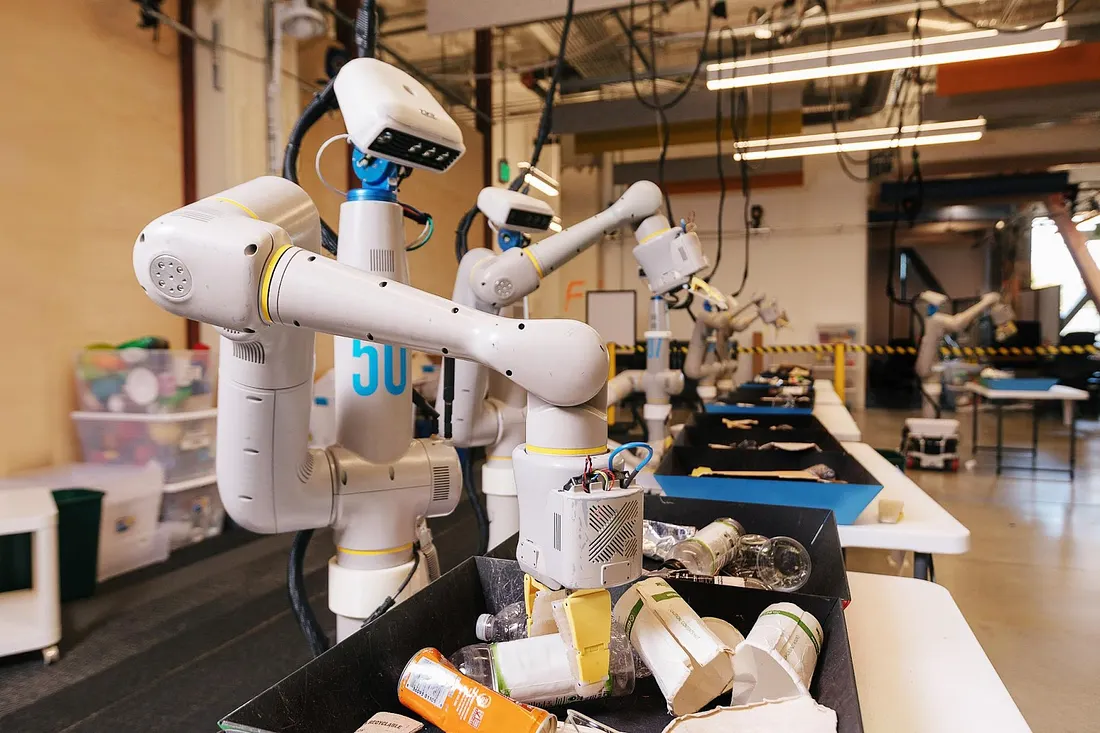
When a general-purpose invention comes, it creates huge change. Computers at their beginning stages were highly specialised, but when they started to become general-purpose, they started to become integral to everything.
Similarly, general-purpose robots with good artificial intelligence would be able to do almost everything and would become an integral part of our civilisation and can easily outcompete humans in almost every field (considering they don’t require minimum wage, their cost is mere pennies worth of electricity etc), they would not create any fuss (protesting, although what would a sentient AI do in such a scenario would be an interesting case study), they would be more efficient (they don’t get tired, bored, lazy or procrastinate, as so many of us do) and better suited (they can adapt to almost every job scenario); so in essence, no job is safe.
Farmers
Farming is one of the biggest sectors of employment and is one of the few sectors where the primary labour for humans has still remained physical, especially for developing countries.
Yet the advent of automation, vertical farming and other emerging fields threaten the status quo.
Countries like Japan, Netherlands are already experiencing a boom in these fields and if the growth continues, farmers, who form the base of employment of developing economies, will face serious risks.
Japan has already developed technologies where it can economically produce rice, almost with zero human labour. And these types of technologies are already being extensively applied for high yielding produce like lettuce.
Companies around the world may buy up land and already start to produce foods with little human input. And if this happens, especially in the developing world, where farmers form a huge chunk of the labour force and are unprepared for these changes, all hell may slowly break loose.
Industrial Workers
RMG employs about 4 million people in our country. What would happen, if most of them slowly lost their jobs?
A factory in China recently announced the creation of a denim factory, where 300 workers can do the job of around 5000 and produce similar volume and even higher quality apparel.
This is probably the fate of RMG workers in Bangladesh.
RMG has always been a sector of low-value products while also being difficult to automate. This resulted in countries in the poorest spectrum, getting into this sector. But all this is changing now, innovations in the world threaten to change the labour intensiveness of this sector.
There is a terrifying amount of automation and artificial intelligence innovation that are currently going on, which may result in these jobs going to countries with highly skilled labour forces, resulting in mass lay-offs of workers from poorer countries. Even if those jobs stayed in their respective countries, these workers would be no better-off.
Competition within the business landscape would force business owners to adapt to the changes, resulting in a slow but sure, decline in the number of overall workers.
Now, RMG is just a single unit of all the many industrial sectors there are and the different types of industrial workers out there. But others also face a similar fate, if not even worse.
So all those working in the steel industry, assembly lines, vehicle manufacturing industry, in short, almost every industrial worker may find their job is replaceable and replaced, slowly but surely.
Retail Workers
In this case, we can already see the change coming. The emergence of the e-commerce market has become a one-two punch in the face of retail workers.
In supermarkets, what used to be 6 cashiers overseeing transactions has become 1 cashier overseeing 6 cashier robots.
Amazon Warehouses are almost automated, and they can deliver you the product using drones, without any human input. So, if you order using that method, everything from order entry to transaction to products arrival, everything becomes automated. Of course, there would be clever programmers who are training these bots, but their numbers are significantly less than the total employment created by the old school scenario.
Moreover, the more people start to rely on online services, the fewer retail workers there would be.
And Amazon has already launched grocery stores without any checkout procedure (Amazon Go)!
Restaurant chains like Starbucks, McDonald’s, Pizza Hut would also slowly be able to reduce their workforce and there wouldn’t be anything much that the workers would be able to do about it.
Granted, not every retail worker would go away, but most of them would soon be replaced in large enough numbers that this is going to create a problem.
Accounting Clerks
Banks used to have large ledger books where everyone who had an account in that bank’s branch, had their transactions listed. Obviously, this was inefficient and time-consuming, so computers slowly took over the process.
Similarly, accounting clerks work, a good part of it can now be automated completely using artificial intelligence, which can decode any transaction, scan the inputs and input the data; the processing, storage and output functions of this profession were already automated in a good way, and this emergence, could be the final punch.
Numerous companies and start-ups are working to automate this difficult looking process, and their success varies, but the point stands, these jobs are mostly gone.
In China, for example, almost anything can be done using the super app WeChat (integrated with WeChat Pay), making it very easy for companies to identify transactions, which again makes these jobs even more easier to automate.
Jobs that are of similar nature, will also go away.
White-Collar Workers
For most companies, a big percentage of their expense goes into the payment of white-collar workers. If only they could be replaced, so much cost could be saved!
And they would be. So, in this current pandemic, you can completely do your work from home using a computer or a smartphone?
Consider your work GONE.
White-collar workers are the easiest to automate, especially if there are fewer human interactions required and are doable through computers.
Everything from managers to customer service representatives, bankers to engineers, doctors to programmers etc. Everything can be easily replaced. Let’s just have a small peek at the scenario with the example of doctors and engineers (which everyone wants to become in my country, Bangladesh).
Doctors
This is a profession that seems impossible to replace, and it will never be fully replaced, just like every other profession.
But, to speak the truth most doctors don’t really stand a chance against the disruption that is coming.
IBM’s Watson can already diagnose heart disease better than cardiologists. It can also understand conversations, the way people talk to doctors, and already diagnose diseases with frightening accuracy. And there are numerous others like this artificial intelligence.
Smartphone apps can now detect skin cancer with expert accuracy and many more. Some forecasts that 80% of doctors works that are currently done would be replaced with Medical AI.
And it is really easy to see why. Doctors learn from experience, practice and continuous studying.
But a doctor can’t learn all the interactions of every chemical with every other chemical, every correlation and causation of a symptom, whereas an artificial intelligence can learn and remember and apply from every material that is out there and also gain knowledge from the latest research all while finding correlation that are impossible for a human doctor to truly find out.
And these Medical AI’s knowledge grows almost exponentially making them making fewer and fewer misdiagnosis (which by the way kills hundreds of thousands of patients every year). So, they would inevitably be cheaper, better and more efficient than doctors.
Engineers
Just like the field of medicine is broad, so is the field of engineering. And just as doctors can be replaced, engineers will be too. In fact, engineers will be easier to replace because of them having fewer human interaction required.
Architects would be replaced by AI architects, which can currently design simple homes with relative ease and is getting better and better. Similarly, other roles in engineering such as civil engineers, mechanical engineers, chemical engineers, all would be replaceable.
They too face the fate of the RMG workers.
That’s why most experts predict that most of the engineering jobs would become non-existent by 2050.
Others
One of the hurdles that Engineer AI and robots are likely to face is the need for creative and abstract reasoning capabilities of those robots. But, these things may not prove to be any hurdles at all.
People used to think Chess is a very human endeavour, until IBM’s Deep Blue defeated Garry Kasparov in 1997; Lee Sedol was defeated by Google’s Deepmind created AlphaGo program in the game of Go, which is thought to be one of the most abstract games there is.

After that, the same team created AlphaGo Zero without any human match data input and played against itself (it was only given the basic rules of the Go game). This AI then played against AlphaGo and the result is here: AlphaGo Zero(100 wins), AlphaGo (0 wins).
Deepmind, later on, created an even more general AI called AlphaZero algorithm, which developed a superhuman level of playing ability in chess, shogi and Go within 24 hours.
Of course, there are many more events like this. AI has defeated the best of humans in the game of Poker (yes poker even!).
Facebook developed DeepFace facial recognition AI achieved a 97% accuracy rate, rivalling that of humans in 2014.
In 2016, Microsoft created AI that can transcribe English language audio making fewer mistakes than humans. In 2017, OpenAI created a bot which defeated DOTA 2 players in an esports event.
Northwestern University researchers developed AI in 2017 that can defeat 75% of US citizens at a visual comprehension test.
And as the last example, in 2018, Alibaba developed AI that outscored humans in a Stanford University test of reading comprehension.
And these are just examples that a simple search online would present to you. Dive deeper, and you would realise that no profession is safe. No white-collar worker is safe. Moreover, most achievements by companies like Apple Inc. are strictly hidden, so it becomes impossible to truly realise how much work of automation is already in progress.
I have given the examples of doctors and engineers, and I am not getting into too many details otherwise this would be 200 pages more of if your job is going to be replaced or not.
The point is, your job is very likely going to be replaced.
So, office clerks, other support clerks, construction workers, technical labourers, accountants, financial analysts, low-level executives, technical managers, cleaners and helpers, chefs and waiters, lawyers, bankers, office associate professionals, military personnel, repetitive data workers (database management worker, payroll and administrative assistants) etc all are under threat.
Jobs That Are Safe (For Now)
Jobs that would require human interactions as a necessary part may be hard to replace. For example, nurses, teachers (especially elementary and high school teachers) may be considered safe (for now).
The banker who works in the foreign exchange division may not be safe, but one who creates relations with customers(bank manager) may be safe. In a similar fashion, not all doctors, engineers, financial analysts, accountants need to go away.
Even though AI and automation would be able to perform most administrative jobs, they may not be altogether replaced, for their requirement of overall interaction.
Jobs of judges, politicians, business owners and similar ones are not likely to be threatened in any significant way.
Similarly, the luxury industry could also be considered a safe haven. “Made by Humans” seems like a good tagline!
An example perhaps would make things clearer.
Take the example of Japan. There are vending machines everywhere, you can buy almost anything from them (although this has less to do with automation and more to do with demographics) including instant noodles. But just beside that vending machine, you may find a restaurant that serves noodles, and it may take 30 minutes for your order to fully be served, whereas you can get your instant noodles instantly.
This does not make that restaurant uncompetitive, the vending machine serving tea and noodles has a completely different demand base than that of the restaurant. Those who are going to the restaurant are going there for the personal touch of the restaurant (and maybe also the food quality).
In the same vein, jobs that have extreme personal touch required to be performed is safe. That is why, the job of a care worker, YouTuber, writer, actor seems safe. At least for now.
And jobs that do not require so, for example, a researcher, would find themselves having no position in the market, as automation and artificial intelligence slowly takes over.
Law enforcement workers (police, fire brigade etc), civil and military administrations and other government jobs are being debated among academics if they would be replaced or not. Some academics believe that nothing much may change. Others point out that if all these monumental shifts take place, no matter how slow the government is, it will have to adapt with the changed reality and slowly replace these jobs too. They point out that the drive to increase efficiency would ultimately force governments’ hands to automate things.
Social workers and counsellors and jobs like that may be highly insulated from the changes to come. The demand for lawyers may decrease, but would still remain intact comparatively.
Supervisors, computer system analysts and some other highly specific jobs, which would be required as the point of last resort, may remain in place.
And programmers are very likely safe, however, there would still be major disruptions in the industry. They are slowly going to be doing less and less programming (which would be done mostly by the AI programmers) and work as a point of last resort.
But the sheer number of industries that will be penetrated by artificial intelligence and automation would keep the demand afloat for programmers, maybe not with the growth that everyone expects, but in general, it would keep on growing for a while and may finally become flat.
Executive leaders and other positions of leadership in society are currently thought of as safe.
Impacts Of The Coming Change
The impacts of the coming change is going to be huge. We have already peaked at the three most likely scenarios that we are likely to experience. Now we will have a look into the changes that may come during the transition period and afterwards.
Developing and Industrially Developed World
Our world is already a very unequal one. The top 30 richest people own more wealth than the bottom 3.5 billion+ people combined. This picture is even grimmer if we consider the wealth of the developed world compared to those of the developing ones. For example, the top 12 countries by GDP own about 81.1% of the world’s wealth!
In this light, it is easy to understand that automation and artificial intelligence are not going to impact Norway and Ivory Coast in the same way. Considering the cynical way our world functions, these changes may as well help bring “the good” scenario in Norway and “the ugly” scenario in Ivory Coast at the same time.
How? You might say.
Well, the innovations that are going to come are going to come from the handful of countries that have already advanced themselves; considering that they can focus their resources on all these technologies, they would also realise the threat of the coming changes and adapt in a way so that they can somewhat counter these challenges.
Moreover, these changes would very likely, in its primary stages, create opportunities that were considered lost. For example, denim is an industry that is seeing a revival in developed countries as the production method has become efficient enough to allow for jobs to be created in the place where the demand lies(developed market mostly).
Levi’s created a factory (a very different type of factory than the stereotypical image of a factory) in the USA after a long time as they have finally managed to produce their products cost-efficiently there. If this didn’t happen, those jobs would have very likely remained in developing markets.
Newer jobs (data scientists, automation engineers etc) that are getting created in this transition period are very likely to stay exclusively in the industrially developed economies, whereas the brunt of these innovations would be immediately felt by the developing world.
And the developed economies are not really likely to help their developing counterparts.
After all, why would a citizen in Norway care about a citizen of Ivory Coast when in reality that citizen probably hasn’t even heard the name of Ivory Coast. The same would be true for politicians and civil servants.
In fact, there is a basic problem of structure, for which the developing economies would likely receive no support at all.
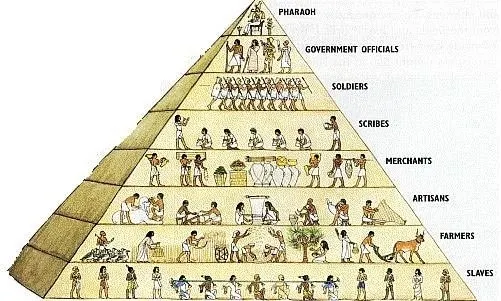
In any scenario of social or political structure, the keys that help keep the power bearer intact are the most important part of that structure.
Suppose you are in a position of power in Norway, you have your interest blocks or keys that want a share of the resources you have control over. You either divide the resource appropriately, or you lose your power.
No interest blocks or keys that matter to you are interested to work for the improvement of Ivory Coast’s case (and a little less specifically, the case of developing countries) and so you, being in a position of power wouldn’t be able to do anything about it.
After all, your hands are already tied with the various demands from interest blocks or keys that matter to you. And they want things that have nothing remotely to do with the Ivory Coast’s case.
In essence, countries like Bangladesh would be left alone to be prepared for the changes that are going to come.
Speaking of which, the notion that developed countries are prepared for the upcoming changes is false. Even they may have a hard time to truly counter the challenges they are going to face. In the short run, automation and artificial intelligence may create some jobs, but that is going to be short-lived and ultimately lead to massive job loss. They are not prepared either.
No one is prepared.
Economic And Political Conditions
The Great Depression of the twentieth century (1929 to 1930s) could be a good reminder of the things to come if we can’t get our act together.
The unemployment rate hovered around 23% to 33% in different countries. Crop prices dropped by as much as 60% in some cases and sectors like construction, mining, logging etc almost came to a halt.
The global economy shrank by almost 15%, compared to the 1% shrinkage in the Great Recession of 2008–2009.
Now this depression was years into the making. Slowly building up like a house of cards only to fall hard.
Similarly, if we continue to ignore the looming threats of automation and artificial intelligence, it too might reveal itself as an unstoppable force.
People are slowly going to lose jobs, almost invisibly (other than a few sectors like driving), politicians and policymakers are going to pin the blame on immigration, globalisation (citing low labour costs of developing countries), taxation (citing higher taxes compared to other countries) etc, not truly realising the core issue at play.
This may lead to the rise of nationalism, fascism and economic closedness. Also, the owners of capital are very likely to enjoy reasonable growth, especially in the stock market, and in turn become more wealthy, which may create an even more extreme income disparity.
It may also create extreme power disparity and a decline of democratic powers’ strength (as a block) in democratic countries. In countries that are already authoritarian, the situation can turn into the current state of South Africa, or even worse.
For example, let’s take a peek at what may happen in a hypothetical scenario.
Let’s say, Standard Chartered bank underwent a very bad quarter (suppose for this Coronavirus pandemic), which resulted in its assets losing value. After the situation turns normal, their senior management realises the big hole they are in. So, to cut costs, they take every measure possible and decide to fire 1200 workers, as their works are already replaceable by artificial intelligence and automation.
Now, this wouldn’t be anything out of the ordinary, and no government in their right mind would decide to stop it. But, that’s how slowly but surely, most of the labour market would become redundant. And nothing much is likely to be done about it.
This type of scenario may still seem unlikely, but HSBC group has already announced to cut down jobs of around 35,000 citing branch closures and some other reasons. But many are suspecting that the number of cuts is bigger than expected, and the reason is the overall ongoing automation and the use of artificial intelligence of the company.
And this brings me to the domino effect, network effect and the extreme power of growth of automation and artificial intelligence.
You have been informed already of the AlphaGo Zero program and AlphaZero program which developed their skills almost exponentially. There are examples of countless other AI programs developing their skills exponentially.
Google, Accenture, Microsoft, Amazon, Salesforce, Tencent all developed AI programs that were slow and inaccurate in their specific fields in the beginning; until it slowly started to surpass general algorithms with ease and the only thing stopping these AI’s is the computational power that these companies are willing to provide.
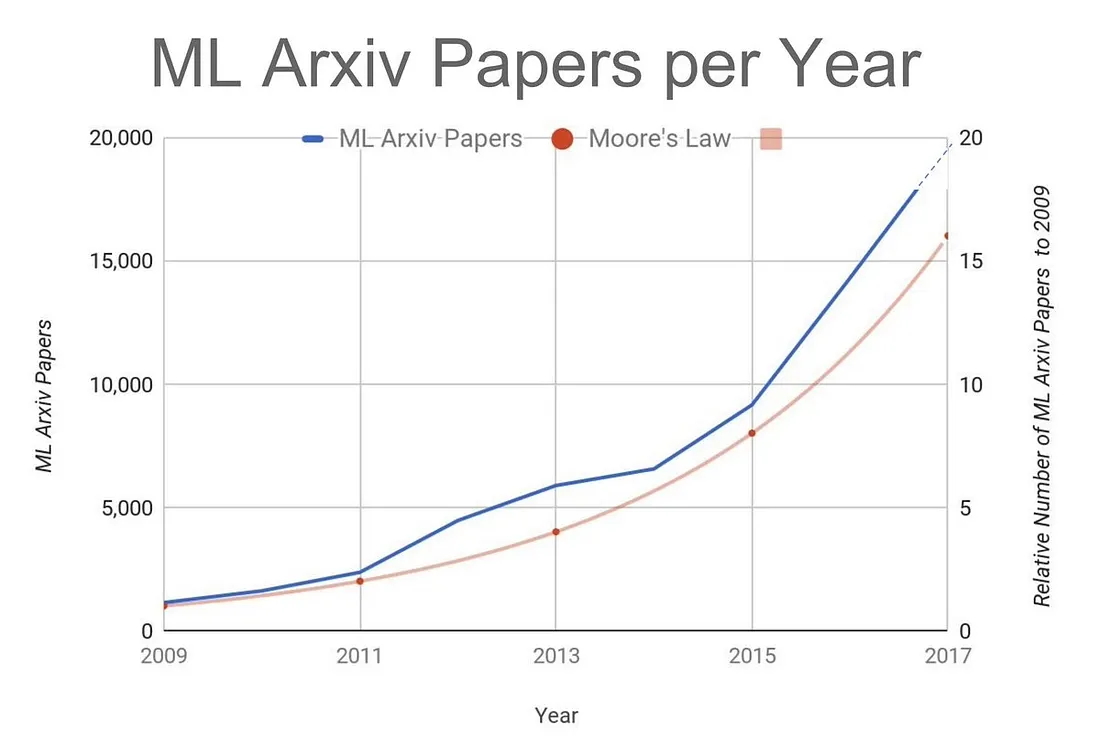
Moore’s observation of integrated chips may as well be true for artificial intelligence and machine learning. Especially considering that quantum computer, 3d printing is slowly getting more mainstream.
Companies that are working in the fields of automation are no slow cat either. For example, the robots produced by Boston Dynamics and those robots’ general progression makes it pretty clear, from plumbing to painting, nothing that may seem delicate and impossible for robots to do, will quickly become possible.
The robots that had a hard time walking can now play football, serve dishes with ease!
And this growth would lead to the adoption of automation and artificial intelligence in the workplace, slowly. But once things start to kick in, companies, to keep themselves competitive, would adopt these technologies. And once some companies have integrated these technologies others would soon follow, because the more the users the more efficient these systems would become. A classic case of the network effect.
And these things, in turn, would lead to the domino effect, where every sector would be scrambling to adapt to these changes, creating a chain reaction of change.
Keep in mind however, all this would be very slow at the beginning stages, in which we are now.
Social Change
If you have read carefully about the jobs that may remain safe at the end, a point may come into your mind.
Nursing, caregiving, teaching etc are all dominated by females and are not so easily replaceable (at least for now). Jobs dominated by males on the other hand, like driving, engineering etc are easily replaceable.
This trend may lead to a dramatic change.
If, say “the good” scenario plays out, these unreplaceable jobs would probably be extremely high paid. In that case, income inequality and the gender pay gap between genders of the current times may reverse.
Of course, there’s nothing preventing males or anyone for that matter, to adapt to these changes. But in a world where working itself becomes optional, adaptation for work is the least plausible.
This could lead to society changing from a male-dominated world to a female-dominated world. The social and political order, however, is not likely to change much. One thing to keep in mind that this is just a hypothesis of social scientists, and it may prove to be false.
If, however, “the bad” scenario plays out, there would be too many candidates for every job out there, and so no change from the current structure would be viable.
Demographic Time Bombs
Countries with low income tend to have a higher total fertility rate (TFR). And these countries are probably going to face the biggest crisis of them all.
Automation and artificial intelligence are slowly going to make human labour less in demand. I hope reading up to this point, you have got this point.
And as human labour starts to get less in demand, humans in effect, become a net burden on the limited resources of our world. This may seem unacceptable, but this is going to be true (and is already true in some respect, think about the pollution clearing up due to Coronavirus pandemic).
Now, think of the economy of Burundi, with a purchasing power parity per capita income of $733 (nominal $307), it’s one of the poorest countries out there. Its economy is not really growing that much either. With an estimated growth rate of 1.8% in 2018.
89% of its workforce is employed in agriculture.
On the other hand, it has a total fertility rate of 5.577, much higher than the replacement level of 2.1.
What would slowly happen to Burundi, which would become one of the worst victims of automation and artificial intelligence, as its growing population comes to face the imminent challenges of these changes?
This is a very open-ended question and may be subject to many answers. But the most likely answer is this.
Its very young workforce would likely be able to do nothing about these changes. They do not have the proper framework to tackle these issues, their government is weak, unprepared. Other countries are not likely to save them in any meaningful way, and in effect, this demographic time bomb will likely create unrest, violence and probably even starvation.
The situation in countries like Bangladesh, which is undergoing a demographic miracle phase, may not be anything better if we are not ready.
And we are not ready.
Shielding Factors
Despite numerous debates, the steps to prepare for these changes is surprisingly unclear, or debated. Most academics seem to realise that these are problems that may not truly be solved in any meaningful way (some think that there wouldn’t be any problem at all), especially considering the way our global economic, political and social systems are designed.
Businesses are busy to protect their shareholder interests and to increase their quarterly earnings, lobbying fiercely against any forms of regulation; politicians are similarly busy to keep their key supporters (businesses and other blocks) in place, so as not to lose power; civil and military administrations are similarly busy with short-term problems, losing focus on the bigger picture; the general public, on the other hand, is uninformed and unable to realise the true problems that they are going to face.
Even after all these, there are some factors, which if they work properly would be useful in countering the changes to come.
Universal Basic Income Or Other Forms Of Protection
Most economists (although some are fiercely against this type of change) seem to agree that if our future is to be dominated by our robot overlords, Universal Basic Income (UBI) is the only protection measure that would keep the economy afloat.
What is UBI? In short, a sum of money would be periodically (monthly, weekly etc) given to all citizens of the nation, regardless of their income level, that’s UBI.
For this to work, countries should already start making a framework of UBI and start giving UBI from this point onward. Slowly, governments can increase the amount of UBI to keep demand afloat.
But the question is, where would all that money come from? This is especially an important question for a country like Bangladesh, where the tax to GDP ratio is one of the lowest in the world.
Developed countries may find some leverage in these scenarios. For example, Andrew Yang, a dropped out presidential candidate in the US presidential election, suggested some methods for funding these type of programs.
He suggested charging a certain amount in every transaction that occurred in the US stock market to fund his freedom dividend (a fancy name for UBI). This would have resulted in the collection of an enormous amount of money.
Another method suggested by some academics is that the government should slowly start buying up more and more parts of those companies working to automate things by purchasing their stocks.
This would mean the growth that would come from these changes (automation and the likes) would help finance the government’s budgetary initiatives.
Since say if Alphabet Inc’s stocks are bought by the Bangladesh government, if that company brings in newer and newer technologies that radically change the market, it would generate wealth for the Bangladesh government, which again would be able to finance ventures like UBI from this excess of wealth.
This, however, has its own flaws, most countries have not developed a mature stock market (Bangladesh for example); many of those companies are not publicly listed (governments can create policy incentives to influence those companies to become publicly listed); to purchase enough stocks to meaningfully impact a country’s balance sheet would open up the question again, how to finance those large purchases; share market volatility would create extreme problems in times of crisis like the current Coronavirus pandemic.
Some even suggested ways like legalising all kinds of drugs and implementing VATs on them as ways of financing UBI (politically difficult).
Many other creative ways are suggested, which would help close the loopholes of the tax structure and finance these ventures. But the question is, are politicians truly interested?
Some economists even suggested creating a truly universal UBI. In which, the tax structure would allow the collection, allocation of tax from and for the whole world. Meaning, a global (albeit fractured) tax agency would collect taxes worldwide and would provide a UBI to all the people of the globe.
But this is like a pipe dream scenario and is unlikely to happen.
So, the question remains, how would the money be collected? After all, countries like Bangladesh, Nigeria, Nepal and the likes are going to face significant barriers to do so.
The answer remains unclear and up for debate and speculation. And we can only hope those in the top can figure out a way to finance this scheme.
Other measures in a similar vein to UBI would face the critical question of where would the money come from. This question of financing these ventures is going to be the ultimate acid test of these measures.
Geopolitical Competition
The current rift between China and the US and other similar geopolitical rifts would have two completely opposing effects.
Firstly, this rift would lead countries to accelerate the pace of innovation. For example, the rift between China and the US has led to these countries being embroiled in a race for technological supremacy.
China has already established itself as the leading player in the race of artificial intelligence. In China, if you jaywalk in the roads of say, Beijing, face recognition cameras would identify you and immediately charge tickets for jaywalking in your WeChat Pay account and the amount would be automatically deducted from you.
Similarly, the US government is also encouraging and funding its companies to compete in this race.
This type of competition would likely have a major impact in bringing automation and artificial intelligence in our overall sphere of life in the short term.
There is, however, a completely opposite effect that we may see from this type of conflict. China and the US, in their desire to have more geopolitical control, would, in turn, help in the development of countries of lesser influence, say Bangladesh and Vietnam.
Thus, even though the speed of automation would likely increase due to this type of geopolitical conflict, it may, in turn, turn into a net positive for the comparatively smaller economies in the long run.
This would, however, require a very strategic balancing act for those countries that want to enjoy the benefits of this conflict.
Awareness
No matter how old fashioned this may seem, awareness is the ultimate factor that is going to shield people from any coming change, be it global warming, natural disasters or anything for that matter.
Without proper awareness, no UBI or any other measures would be taken, or even if they are taken, they would be too little too late.
People must realise the inevitability of the changes to come within the coming decades to prepare for the upcoming changes.
And if enough people become aware of the situation, politicians, business leaders and other key blocks would have to act to protect their best interest.
So, we should spread the word and be a part of the new renaissance, the next big thing and probably, humanity’s last great inventions.
The Endgame
All is not lost.
In fact, if world leaders and the general mass realise the change that’s coming, we may be able to have a world where almost no one has to work and everyone from every corner of the world have their basic needs and other demands fulfilled.
But to reach this scenario, we must first cross the stage of transition we are in now. And so, we must act in a way so that the transition remains a smooth one.
Otherwise, the economic and social scenario of the bad and the ugly awaits us. Some economists even predict that we may actually at first land into the bad scenario, then transition towards the ugly scenario and finally may be able to reach the good scenario.
Regardless of our future, we must prepare, now.
Sundar Pichai, Jack Ma, Bill Gates, Elon Musk and many others have already pointed out that we don’t have enough time, we have to be ready. They have also made it pretty clear what would happen if we are not ready.
Changes, however terrifying they may seem, are constant, we either adapt, or we don’t. If we don’t adapt, the damage that would be done would be lethal.
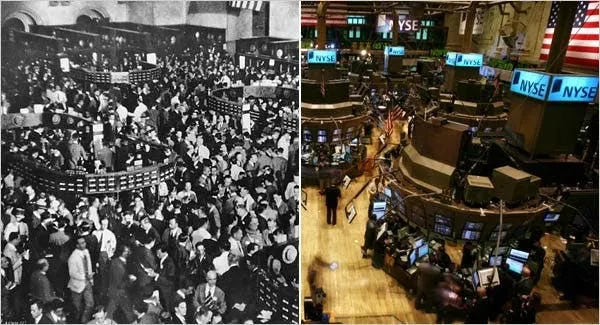
The trading floor of NYSE provides us with a good picture of what’s to come.
Previously, it was traders making hasty phone calls and trading, now it’s mostly a TV set, trading is mostly being done by bots that trade with other bots. These bots are able to train themselves, keep track of myriads of data (newspaper articles, financial statements, tweets, TV and other programs etc) and trade with efficiency no human trader (or group of traders) can hope to match.
Now, traders haven’t gone extinct, and will not go extinct, but their numbers have roughly remained flat. Whereas, the adoption of these technologies is everywhere.
Hedge funds, pension funds, investment banks, investment advisory companies have all shifted towards those bots.
Similarly, to think that other jobs that are abstract, complicated, vague, creative etc would not go away would be foolish.
If there’s only one takeaway you should have from this piece of writing, it is this, artificial intelligence and automation will penetrate our society, deeply, and you should be ready for the changes that are coming.
Granted, I have said many things vaguely, in between the lines; didn’t point out how every job is going to be affected; talked mostly on the macro scale and not in the micro-scale. After all, what can you SPECIFICALLY do about it? How best can YOU prepare for yourself?
These are questions for another day.
There are other questions that may come.
Will we become a space-faring nation? Or will we start to look inward, passing our entire lives in a virtual reality-like environment? AI singularity? Or something completely unexpected (in any direction)?
Who knows what’s going to happen. We are very bad at predicting the future. 150 years ago, people thought we would never reach the moon yet dig into the centre of the earth. We know what happened. Thus we should focus our energy on the present.
The ongoing Coronavirus pandemic could also be a tipping point, which may result in job losses, especially after corporate leaders recognise the deep hole they are in. They may decide to automate things aggressively, so as to create a long-lasting cost saving.
I am personally very excited to see what comes next. If anything, these are exciting times.
For now, though, I can only think of one thing, good luck getting into retirement without getting replaced (to me and to you)! :)